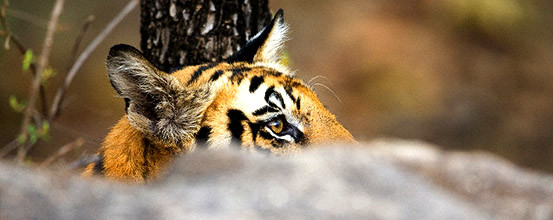
WildLife

Wandering about in a wildlife sanctuary and witnessing
the wildlife therein can be quite an adventurous experience. Whether it is done
while riding on an elephant's back, or from a watch tower or from a boat, the
thrill that one can have while spotting herds of wild elephants, deer and predators
catching their preys in their natural habitat is much more exciting than watching
a wildlife documentary on television.
Such as the Bharatpur Bird Sanctuary known as largest
bird sanctuary in Asia, which is much more famous as a refuge of migratory birds
like barons, ibis, pelicans and painted storks that make it their temporary
home during the winter months. Two splendid protected habitats situated in the
Himalayan foothills are the Corbett National Park and The Dudhwa National Park
that provide an unforgettable wildlife experience. The most pleasant time to
visit any wildlife sanctuary in India, with the exception of Dachigam is the
months between October and March. However, the chances of spotting wildlife
are better from March to June when the weather is hot.
Precautions
No wildlife adventure is complete without sighting a pride of lions luxuriating
down lazily in the hot sun. It is always important to take precautions of never
landing down out of your vehicle to snap close-up pictures of the wilds. It
is an absolute way of risking your life.
Treat the wild mammals with the respect that they
deserve. Try not making quick and fast movements and also any noises that really
irritate these creatures. Try to be extra cautious if you see elephant turning
towards you, flapping their ears and erecting their trunks, it might be dangerous.
Rhinos are wild beast and known for their bad moods, disturbing their line of
vision can provoke them to charge you down. You have to take special precautions
while dealing with hippopotamus as it is the most dangerous wild animal among
all- it is estimated that they kill more people than any other animal. 
Take extra caution while making your moves- your
motion should be slow and quiet. Wear natural colors and unscented lotions,
so that can nicely merge with the forest woods.
Some sighting locations have on-site staff and
wild life experts. Don't be afraid to ask for advice.
Don't try to share your food with the animals,
let them enjoy their natural foods, otherwise they might lose their fear of
cars, campers, or even poachers.
Learn to identify symbol of alarm, these are sometimes
discriminating, leave the place immediately if any animal shows them.
Essential Skills
Knowing the feeding habits of these wild habitats will help you to find them
in their natural habitat. Be respectful of nesting areas and vegetated grounds.
Look for animal sign- marks in the mud or snow, odd smell and flora that has
been freshly riffle are all evidenced that wildlife has been in the area.
The most essential skills in the wildlife photography
safari tours is "be patient" don't expect the wildlife to cooperate
all the time. Permit yourself enough time in the wild, where wild life is copious,
it can take years, if not a lifetime, to see all the species listed in this
guide and to store few in your cam.
Learn the skill of photographing the wildlife species
from a correct distance. Try to photograph small animals from a low camera position
to emphasize their size, when you go for close-up photography of wildlife, try
with a long lens adjusting the camera at f8 and focus on the animal's eyes.
A lens of 300mm in focal length is quite appropriate for mammal photography
and for birds 500mm is a good beginning point.
Gear Up
Binoculars are one of the important gears up in a wildlife safari tour, in fact,
every person in the safari tour should carry their binoculars along with them
as the probability of sighting wildlife increases more with it. Also it is far
better to take along a compact, digital, transportable camera than relying on
a camera with film. Having a topographic map, compass, GPS unit, or just paying
attention to the jungle rules, will be of great help to you.
A strong, lightweight flashlight with a red
lens is a must for nighttime viewing, as it will not scare wildlife where as
the bright light of a white beam will demolish your night visibility.
|