If there is one place on the face of earth where all the dreams of living
men have found a home, from the very earliest days when man began the dream
for existence, it is Mumbai! These words of Romain Rolland say it all. Mumbai
is the nagaria of dreams. People come in from all over the country to make
their life here, some succeed and move to the tallest and posh-est of homes
others are reduced to nothing and pass their nights on railway platforms.
It is also a city of contrasts. Huge contrasts. A strong regional movement
turned the name of the city and its institutions around, Bombay became Mumbai,
Victoria terminus became Chattrapati Shivaji terminus and a lot many more
but the heart of Bombay has not changed. It will take you into its folds no
matter what your status or signature.
History
The city of Mumbai is actually nothing but a collection of seven islands,
and a lot of reclaimed land! It’s true, whether you believe-it-or-not.
In the yester years Bombay consisted of islands Colaba, Mazagao, Old Woman's
Island, Wadala, Mahim, Parel, and Matunga-Sion.
Through the years these passed through various hands, the Hindu rulers, the
Mohammedans, the Portuguese (A lot of structures like the Afghan church, Mahim
Mosque have been built in this era. In fact some say Bombay got its name thanks
to the Portuguese who called it "Bom Baia" which in Portuguese means
"Good Bay". The truth behind the name is still not very clear, most
original Bombaiites (kolis) believe the name origins from Mumbaidevi, the
goddess of Mumbai).
Anyways, the islands were then gifted to Charles II of England in 1661, as
a dowry for his Portuguese wife Catherine de Braganza. These were in turn
then leased out to the British East India Company in 1668, for as little as
an annual sum of 10 pounds in gold! Yes that’s what Bombay meant to them.
A mammoth engineering project began in 1817 to merge all the islands into
one. The kolis, the original folks of Bombay moved out to smaller areas mainly
Backbay reclamation, Mahim, Bandra, Khar, Bassien and Madh island where they
continue to live.
Over years, the city grew into a major urban centre archaic and gothic building
dotted the face of Bombay and in 1930, Bombay got its current world famous
BSE building. Bombay has played a very important role in the independence
especially at the time of the Quit India Movement. Post independence Bombay
was the capital for both Maharashtra and Gujarat as we know them today. Post
1950 however Bombay became the capital of Maharashtra and continues to grow
and glow by the day. Some time in the late 90’s Bombay became Mumbai.
A note from history: As a result of a mysterious fire which started in the
docks of Bombay, on Friday April 14, 1944, the ship "Fort Stikine"
(7420 tons) blew up here. At the time the ship was about to unload a lethal
combination of cargo of dried fish and cotton bales (loaded from Karachi),
timber, gun powder, ammunition, and gold bars from London (the latter to stabilize
the Indian Rupee, which was sagging due to the Second World War and fear of
invasion from Japan). The gold bullion was valued at approx. two million Pounds
Sterling at that time. The two explosions were so loud that windows rattled
and shattered as far away as Dadar, a distance of 8 miles. The destruction
in the docks and surrounding area was immense and several hundred dock workers
were killed instantly.
The population of the city was panic stricken as rumours spread rapidly that
the explosions signaled the commencement of hostilities by the Japanese on
the same style as the surprise attack on Pearl Harbour in the Hawaiian islands
in December 1941. The Japanese were in fact nowhere near Bombay since they
were engaged in fighting a losing battle with the British army in Burma at
that time. Nevertheless, the Bombay Central (BB&CI) and Victoria Terminus
(GIP) stations were packed to capacity with terrorized people fleeing the
city in whichever train they could board for their villages with all belongings
they could carry. At the time of the explosion, one of the gold bars crashed
through the roof of the third floor apartment of a Parsi named D.C. Motivala
more than a mile from the docks. He promptly returned the gold bar to the
authorities. Almost all of the other gold bars were subsequently recovered
from different parts of the city; the last ones to be found were hauled up
from the bottom of the sea in the docks. However, during normal dredging operations
carried out periodically to maintain the depth of the docking bays one or
two gold bars were found intact as late as the 1970s and returned to the British
government.
What to see
Bombay is a tourists’ paradise, there's so much to see here that one
barely has enough time to take a compete tour of the city, in fact people living
here too have not seen all that Mumbai has to offer and that's not over exaggerating.
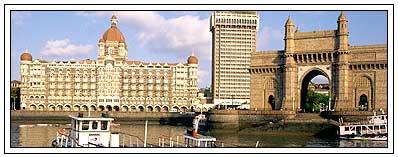
Gateway of India
This triumphal arch was built to commemorate the visit of King George V and
Queen Mary, but it has now become a great spot for romance. Where one can
sit against the walls that separate the sea from the road having their little
bites and probably feeding the pigeons too; with a view of the gigantic Taj
Mahal Hotel on one end and Navy Nagar on the other. At times you can see big
cruise liners and ships docked here too. Do hop onto one of the motor launches
that start at the gateway, they take you on a cruise through Mumbai's splendid
natural harbour. Another must-do is the evening tanga ride on the coast, along
Apollo Bunder. It is a little expensive at about Rs. 300, but the sights and
the breeze make it worthwhile. Launches for Elephanta Caves set off from the
Gateway of India.
Flora Fountain
Right in the heart of Mumbai, lies this serene spot. It gets its name from
the Roman Goddess of Flower, whose statute is the pivot around which two torch-bearing
patriots statues have been installed. The fountain looms between tall buildings
housing offices and shops. Flora Fountain is now called Hutatma Chowk or Martyr's
Square to honour those who died in the tumultuous birth of Maharashtra State.
It’s a great place to go to too shop, most Banks have their head offices
in this area.
Chhatrapati Shivaji Terminus
Chattrapati Shivaji Terminus has an interesting history. One of the areas
along the eastern shore line of Mumbai, it was used as a storehouse for goods
imported and exported from Bombay. In the 1850s, the Great Indian Peninsular
Railway built its railway terminus in this area and the station took its name
as Bori Bunder, which literally means a place where sacks are stored. It was
eventually named Victoria Terminus and now, is called Chhatrapati Shivaji
Terminus. This structure is an architectural beauty with carvings of peacocks,
gargoyles, monkeys, elephants and British lions mixed up among the buttresses,
domes, turrets, spires and stained glass windows, this is one of the busiest
stations in the world. If you have the time, come here during office hours,
just to watch the mad rush of people getting into and off the trains.
Rajabhai Tower
This is where most Mumbaiites come to receive their convocation degrees. The
tower lies within the university campus, right next to the High Court. The
Gothic clock tower that rises above the portion of the library section has
always given the right time and has stopped just once in all these years.
Very recently the clock tower got a new life, with its stain glass windows
being re-done. Consisting of five elaborately decorated storeys, the tower
is 280 ft. in height. The top of the cupola is ornamented with sixteen statues
and about 30 ft. from the ground are eight other statues. You can see this
tower from the longest of distances, just opposite this lies a huge ground,
cross it and you come to Bombay’s best book store, the Oxford book store.
Crawford market
This is one market that’s always buzzing with people, both traders and
housewives who shop here for their supplies of veggies, meats, and fruits
at wholesale rates. Now called Jyotibha Phule market, this market is one of
the most colorful indoor market in Mumbai, the structure itself is quite interesting
with a blend of Flemish and Norman architecture. The market was designed by
Lockyard Kipling, father of the famous Rudyard Kipling. Incidentally the Kiplings'
cottage stands a stones? throw away from the market within the campus of J
J School of Art. If you come here, make sure you get into the Huge cloth market
a stones throw away from here, Zaveri bazaar is a five minute walk from here.
Mani Bhawan
On the yellow-flower, tree-lined quiet Laburnum Road, lies the Mumbai home
of Mahatma Gandhi. This nondescript structure has a photo exhibition of the
Mahatma's life, well-preserved memorabilia including an old charkha or spinning
wheel that Gandhiji used and a library with over 2,000 books. Many Gandhians
still frequent this place to weave fabric and spin the charkha. It is open
10 am-6 pm.
Prince of Wales Museum
This is one spot of Mumbai that’s always flooded with tourists and locals
alike. To call the building impressive is an understatement, both from the
insides and outsides. The building is an impressive mix of Gothic and Islamic
architectures. Inside are artifacts dating back to 2000 BC, to the Harappan
period. But everybody’s favourite are the over 2000 miniature paintings
from various art schools of India, it also has a fine collection of oil paintings
and Chinese Jade pieces. The museum itself is divided into three main sections:
Art, Archaeology and Natural History. When here do not miss a miniature model
of the Paris Tower of Silence at Malabar Hill. Timings are 10.15 am-6 pm,
Mondays are holidays.
Jehangir Art Gallery
Next to the Prince of Wales Museum is Mumbai premier gallery hosting weekly/monthly
exhibitions of well-known Indian artists as well as beginners. The restaurant
at the art gallery, Samovar serves some of the best snacks, parathas and sprouts
salads, do take a bite when you’re here. The gallery becomes the centre
of activity during the Kala Ghoda festival. A lot of upcoming artists and
street artists showcase their work on the promenade just outside the gallery
too. Timings are 11 am-6 pm.
National Gallery of Modern Art
Standing tall opposite the Prince of Wales Museum is the NGMA, a devastatingly
beautiful structure that was once the old public hall. The gallery showcases
works of India's best-known artists. There is one permanent exhibit, while
the rest of the gallery is used by various artists to put up their shows.
If you are into art this is one place you must come too, it’s your window
to the country's contemporary art scenario. The museum is open 11 am-6 pm;
Mondays are holidays.
Nehru Centre and Planetarium
The spank centre built as a memorial to India’s first prime minister
has an elaborate Discovery of India exhibition, a must visit for anyone interested
in the history of our country. The planetarium next door is also very popular
with amateur astronomers. Daily shows reveal the timeless mysteries of the
cosmos. It is open all days except Mondays with shows in three languages.
Chowpatty
Mumbai's most famous beach is better known for the yummy food you get in the
tiny eateries here, than it is known for the sand and the surf. This is where
Mumbai’s biggest Ganapatis come for immersion during the 11 day ganesh-utsav
festival. At that time this part of the city is best organized as there are
hundred of cops all over and the roads are made one-way. A Nana Nani Park
has recently been created around the beach, it also now houses a water sports
complex (closed during the rainy months). Come here to feed the pigeons, there’s
a huge feeding ground, Just next to the beach stands teen batti, a signaling
post that was used for the ships coming to bay in the yester years.
Juhu
Scampering children, romancing couples and evening joggers, that’s Juhu
but more than that, this is the place for golas (ice lolly) and chaats. There
is no better place to experience the true Mumbaiya spirit than here. Stay
out of the water and avoid coming here on a Sunday though, and for those of
you who wish to sip some warm liquids after a cool day by the beach, there's
Mocha’s right opposite and the very famous Shiv Sagar for all kinds of
good food and drinks around the corner.
Bandstand
At the very end of Bandra, Bandstand is known for its lovely jogger’s
park, the homes of a few well known celebs and the promenade that got a lot
of attention during its make over. That apart this is one place where you
can enjoy a quiet meal at the sea side cafe and can actually sit on the rocky
beach and watch the sea all day long.
Sanjay Gandhi National Park
Mumbai is the only city to have a national park within its city limits! But
over time this green lung also seems to be shrinking with the city growing
far faster than its means to provide space to live. Nevertheless the park
still has a few leopards, tigers (all captive), birds and butterflies, deers,
monkeys, hyenas. The national park opens into the Yevur hills of Thane onto
the other end. For the kids they have a 30-minute lion and tiger safari that
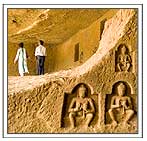
starts at about 1 Kms distance from the entrance gate. Within the park are
the Kanheri Caves, a monastery where monks practiced their austerities around
the 1st century AD. Unlike Elephanta, these caves are much simpler.
Hanging Gardens
Atop Malabar Hill, it offers great views of the whole of Mumbai city. These
gardens are just opposite the Kamala Nehru Park and provide lovely sunset
views over the Arabian Sea. The park was laid out in the early 1880s over
Bombay’s main reservoir, some say to cover the water from the potentially
contaminating activity of the nearby Towers of Silence. It to date is a great
place to hang out.
Priyadarshini Park
The park where the elite of Bombay come to walk, Priyadarshini Park is on
the busy Neapean Sea road. This is the only park to offer yoga classes by
the morning and evening. Laughter clubs are also associated with this park,
so don’t be surprised to see a group of grown men and women laughing
their guts out while you are on your morning walk!
Khotachiwadi
Amidst the high rises of South Mumbai is this hamlet of Maharashtrian Hindus
and Christians. Near Opera House lies this tiny wadi with smaller gallies
(streets) and homes that are reminiscent of old village homes, with a city
touch to it. The colors on the homes here are extremely young and alive. A
few of Bombay’s famous personalities stay here, when you’re here
go across to anantashram for awesome fish food.
Dhobi Ghat
Here is where the dhobis (washermen) of Mumbai unite, wash the dirty linen
collected from all over and return it neatly pressed to every house, all for
a pittance. The endless lines of dhobis soaping, rinsing, and drying clothes
is a sight to behold. The Ghat is near Mahalaxmi railway station.
Sassoon Dock
The fishing area in downtown Colaba, this is where you will rub shoulders
with the typical fisherfolk of Mumbai. There is a perpetual pervasive smell
of fish and chaos reigns, yet Sassoon dock is an experience worth undertaking.
The streets here are full of nets either being woven together or those full
of fresh catch.
Worli Fishing Village
It is inhabited by the Kolis, the original residents of Mumbai. These tribal
fisherfolk live here in tightly knit communities, the colourful koli women,
their dark skins offset by chunky tribal jewellery are great photo subjects.
Getaways
When the hustle and bustle of Mumbai gets to you, GETAWAY for a short while.
Chill out at the cozy retreats and refreshing hill stations situated a couple
of hours outside the city.
Saguna Baug Tour
Located 100kms from Mumbai at Neral is Saguna Baug, a centre for aqua, agro
forestry, dairy and horticulture. This 50acre agro-tourism retreat is the
most charming rural getaway 2 hrs away from Mumbai. The farm offers many activities
such as boating in the pond, nature walks, fishing and bird watching. Visitors
are served home cooked meals made entirely from the produce of the land. Overnight
stays can be arranged in a bungalow, a dormitory, a pond house or even a log
cabin.
Alibaug
Known for its 9 beaches, clean sand and water Alibaug is situated to the South
of Mumbai, an hour and a half away on the west coast of India. Launch services
from the Gateway of India ferry passengers to Mandawa from where a bus has
to be boarded onwards to Alibaug. Fort Kulaba off the main seashore attracts
a lot of attention. But it can only be visited during low tide.
Kashid
Described as one of the best beaches on the Konkan strip of Maharashtra, Kashid
is 3 hours away from Mumbai. It has pure white sand and blue seas, green mountains,
rice fields, lakes and rivulets. You can either drive down or take a catamaran
from the Gateway of India, alight at Mandawa jetty and hope onto a bus or
an auto rickshaw to Kashid Beach. Though you may not find restaurants on the
beach there are plenty in the village.
Lonavala-Khandala
the best view of the Sahyadri Hills, especially during the monsoons can be
had from the charming twin resorts of Lonavala and Khandala. Two hours away
from Mumbai these hill stations are barely 5 km of each other, perched 600
metres high on the Western Slopes. All trains from Mumbai to Pune on the Central
line stop here. They offer a cool invigorating climate and are a good getaway.
Lakes and dams dot the area and just walking around is an experience. The
ancient Buddhist rock cut caves of Bhaja and Karla can be visited near Khandala.
The best thing to buy here is Chikki (the Indian stick-jaw toffee).
Mahableshwar & Panchgani
Three hours away from Mumbai, Mahableshwar is the highest hill station in
the Western Ghats. It was established as a health resort as early in 1829.
Panchgani is 38 m below Mahableshwar and is quite the quintessential hill
station, with the Raj stamped all over it. It can be seen in the old architecture
of the old British buildings, the Parsi houses, and the boarding schools that
have been for a century or more. Leafy bridle paths and picturesque points
dot both the hill stations. A great place to shop for jams, chikki, roasted
gram and footwear.
Matheran a very green hill station, over three hours away from Mumbai can
be reached half way by train and the other half by foot, because no air-polluting
vehicles are allowed here. The roads are made of red laterite earth. There
are many "points" (viewpoints) which give a panoramic view of the
plains below. On clear nights, the lights of Mumbai are claimed to be visible.
Matheran is known for its juttis and trekking trails.
Dining Out
There is no dearth of good restaurants in Mumbai even though the city's obsession
with Chinese food has not quite abated. But given the way the city has grown
over the years it has, food wise, brought most of the world within its fold.
Your, appetite, food preferences and wallet are all that you need to savour
the culinary creations that the city has to offer.
Chaat
Even before you set foot into smartly lit plush restaurants, you must treat
your palate to the tongue-tickling Chaat that Mumbai is so famous for. This
variety of spicy chutney flavoured snacks includes - bhel, pani puri, ragda
patties etc. The best chaat outlets in the city are in the open on the beaches
at Chowpatty and Juhu, or Khao Galli near Sunderbai Hall, Churchgate. Elco
Arcade on Hill road Bandra is said to have the best chaat in the city.
Old Haunts Among the eateries that have become the regular haunts of collegians,
office goers and artistes is Café eopold (Colaba). You can grab a decent
meal and drown it with tea or a glass of beer. A 'must eat' in the city is
wholesome Parsi food and there is no better place than Jimmy Boy at Hutatma
Chowk (Fort Area), where the dhansak, chicken farcha and salli boti are quite
tasty.
Bombay Biryani The city's best Biryani is available at Hotel Fountain Plaza,
which is in a lane next to Handloom House, just off DN Road. Other great Biryani
outlets are "Hyderabad House" next to Seven Bungalows Garden, Andheri
West. Lucky, at Bandra and Just Biryani at Oshiwara (Andheri West). This place
also serves a unique Mangalorean fish Biryani.
Sea FoodBeing a coastal city, Mumbai has great seafood restaurants. The city's
best seafood joints are Mahesh Lunch Home (Cowasji Patel Street, Fort), Trishna
(Kala Ghoda) in South Bombay and Gazalee in Vile Parle.
Swati Snacks at Tardeo prepares awesome fadani kichdi besides other Gujarati
delicacies. Panchvati Gaurav, next to Bombay Hospital at Churchgate also serves
tasty meals with unlimited helpings. Rajdhani at Kalbadevi and Golden Thali
at Charni Road specialize in Rajasthani meals.
Chinese
Bombay's best Chinese restaurants are Lings Pavilion (Colaba), China Gate
(Bandra) and Chinese Room (Napean Sea Road).
Another is Goa Portuguesa at Mahim which serves a variety of Goan and Portuguese
delicacies (Veg and Non-Veg) including chicken xacuti, prawn balchao, sorpotel
and baked vegetables. It is an authentic Goan restaurant outside Goa. A decent
meal would cost RS 400 here, but the restaurant also offers power lunches.
PopTates at Malad next to movie time offers some great American fare, including
pizzas, pastas and Mexican food. Meals and Cocktails are reasonable. The ambience
is good, with great food and good music. Urban Tadka North Indian food, Ambarsariya
Murgha', Kheema Khaleji, nimbu Chicken, the varieties are superb. It is situated
at Thakur Complex, Kandivli (East) and also has outlets at Seven Bungalows,
Juhu-Versova road, Andheri (west).
Mumbai's elite culinary universe has grown to include some really phenomenal
dining places.
Indiana Jones at Hilton Towers Nariman Point is the best South East Asian
Restaurant in the city. Stone and wood set up a harmonious balance in this
restaurant which is open from 12.30pm to 11.45 pm and the menu comprises 118
recipes from Singapore, Malaysia, Burma, Vietnam, Thailand and Indonesia.
Dome, the rooftop bar and restaurant at Intercontinental Marine Drive, offers
the most breathtaking view of the Mumbai harbour, besides tapas and grills.
The terrace area offers an informal atmosphere and an open-air cocktail lounge.
The feeling is both residential and romantic. The Dome has been voted Mumbai's
most Romantic Restaurant of the year 2005-2006. It is open after 7 pm.
Nightlife
Cafe Mondegar, near Regal Cinema is a lively place where the jukebox plays
good rock, jazz and pop music. The wall decor comprises cartoon and quotes
from George Bernard Shaw The Mondegar's exclusive inner sanctum is an English
style pub called The Inside Story. Timings: 8:30 am - 12:30 am.
The Ghetto, near Breach Candy, is where the city's creative minds come to
play their own music and contribute to the graffiti on the wall. Beer is served
by the pitcher; there are pool tables and a small dance floor. Timings: 7
pm to 12:30 am.
Jazz By The Bay, on Marine Drive known for its karaoke nights and jazz sessions.
Sunday-Tuesday are Karaoke nights. Wednesday-Friday are reserved for the live
bands. Saturday is celebrity night. Timings: 12.30 pm and 12.30 am.
Insomnia at Taj Mahal Hotel and Palace, Apollo Bunder is a three level night
club comprising Lobby, the main dance floor and three main lounges. Timings
9pm onwards.
Club Escape Crystal Plaza, New Link Road Andheri (E) is a place for good
martinis offered over a 24 foot long bar. Timings: 9 pm onwards.
Lush Lounge And Grill at the Phoenix Mills compound , Lower Parel is Mumbai's
New York style Soho Lounge, usually packed to the seams. It is popular for
its music. Timings 12.30 pm to 3.30 pm, 7 pm to 1.30 am.
Rock Bottom, at Hotel Ramee Guestline, Juhu, is probably one of the largest
clubs in the city situated in the Hotel basement. Timings 9 pm onwards.
Enigma at JW Marriott Hotel has exotic interiors and a good dance floor in
tones of wood and great music by DJ Aqueel. Timings; 9.30 pm to 3a m.
Bed at Linking Road Bandra gets it name from its decor. No bar stools here.
Only beds! And of course good music by DJ Suketu. Timings 9 pm onward.
Shopping
You can shop till you drop in Mumbai because this is one metropolis that has
everything from all across the country and the world! Haute couture, cheap
one- season wear, intricate jewelry, unique antiques, curios, gizmos, electronic
gadgets and more, Mumbai has it all! A veritable shopper's paradise, Mumbai's
numerous shopping centers, markets and malls and the best places to sift,
sort and pick the best bargains in the country. The city's glitzy Malls -
Crossroads (Haji Ali), Phoenix Mills Mall (Lower Parel), Inorbit
Mall- (Malad), Infinity- (Oshiwara, Andheri) have all things glam and gorgeous.
But for the shopper who wants to stretch his/her currency then the places
to visit are the old haunts.
The Crawford Market area, for instance, is one place in the city where you
can buy anything from a button to a Blazer. The best cloth deals (Rs 50 to
Rs 100 a yard and more) can be found at Kapad Bazaar and Manish Market
near Crawford market. Manish market is also known for portable electronic
goods, game CD's and foreign perfumes. The imported cloth stores Valkan and
BeautySilkPalace are where the trendiest fabrics of the season are found with
prices ranging from RS 100 to RS 500 a yard. Readymade garments, including
export surplus apparel can be picked up at Fashion Street which is right across
the road from Bombay Gymkhana on M.G. Road. Makeshift stalls displaying
the trendiest of T-Shirts, trousers, skirts and dresses line the street. If
you want a good deal, bargain for under half of the quoted price. The Colaba
Causeway is another place to street shop. Haggle your way to buying smart
bags, sunglasses, silk scarves, Capri's, wood and brass works, CD's, DVD's
and imitation jewelry.
Gandhi Market near Matunga Station is known for its variety of fabric
stocks, tailors and low priced designer wear. Authentic hand made kurtas can
be bought at the Khadi Bhandar outlets on D.N Road near Hutatma Chowk and
opposite Andheri Station (West).
The Roopam and Sheetal chain of stores at Grant Road, Warden Road, Crawford
Market, Santacruz and the Inorbit Mall at Malad, sell the best designer wear
in the city, be it embroidered saris, kurtas, chaniya cholis or sherwanis.
To find your very own selection of Indian haute couture, you could visit the
Azeem Khan Couture at Usha Sadan, in Colaba or check out the works of prominent
designers Shahab Durazi, Tarun Tahiliani, Monisha Jaisingh, etc at Ensemble
in the Great Western Building, Kala Ghoda/Fort. Ritu Kumar's Boutique can
be found on Warden Road as well as at Hilton Towers and Phoenix Mills. There
are also trendy boutiques at Kemp's Corner, Napean Sea Road, Warden Road (Amarsons
and Premsons) and Breach Candy. (Eternia)
Located at the Bandra - Sion Link Road, Asia's largest slum Dharavi, is the
heart of the leather goods industry. Leather handbags, belts, wallets and
other accessories made here are exported world-wide and also sold at the local
department store and Malls.
The Heera Panna Shopping Centre on the bend at Haji Ali sells foreign goods,
including designer wear, electronic items, cell phones and household gadgets.
Bandra's Linking Road and Hill Road is the best place for wild, whacky
and trendy shopping. While the former is better known for its rows of shoe
shops, the latter is a haunt for readymade garments- both the cheap and expensive
variety. You can buy a T-shirt for Rs 50 off the street or walk across to
Globus and pick up one for Rs 500. The choice is yours, but the variety can
drive you crazy.
Most of the Handicrafts emporia and bazaars are located in the downtown area
of Mumbai. And are usually open between 10 am and 7pm. Avante, opposite Regal
Cinema, is famous for its collection of souvenirs. The Bombay Store at Western
India House, Sir P.M Road Fort is stocked with Indian handicrafts, from leatherwear
and silk scarves to bed linen, crockery, jewelry, incense and aromatherapy
oils. The Central Cottage Industries Emporium, behind Regal Cinema, near the
Gateway of India, is a fixed price government shops that sells well crafted
items in brass, stone and wood, as well as furniture, perfumed candles, incense,
aromatic oils, Indian teas and silk. Contemporary Arts and Crafts, in the
residential neighborhood of Nepean Sea Road, near Kemps Corner has tasteful
collections of crafts. It is a good place to find gifts, such as carved wooden
trays, picture frames, hand-painted coasters, candle stands and embroidered
cushion covers. Good Earth at Raghuvanshi Mansion, Next to Phoenix Mill Compound,
Lower Parel specializes in wooden and cane furniture, table wear and cutlery
and aromatic bath products.
India's most famous dhurrie designer, Shyam Ahuja has shops at India House,
Kemps Corner and at Thane. The store is also known for outstanding and expensive
hand-woven products. Besides gorgeous home furnishings, table linen, bathrobes,
and towels, you can purchase authentic Pashmina shawls here.
Mumbai is full of gold and diamond jewelry stores but the most trusted name
is that of Tribhovandas Bhimji Zaveri at Zaveri Bazaar and various outlets
in the city. Serious buyers looking for one-of-a-kind pieces should consider
contacting master craftspeople Viren Bhagat or Panna J. Jhaveri , both by
appointment only.
For unusual antique finds and colonial furniture, there's no place like Chor
Bazaar's Mutton Street (closed on Fri), which is full of hidden treasures.
If you do not have your wits about you here you will be relieved of whatever
you have!
Visiting
Being sea-locked, Mumbai has temperate weather, the weather never ever
really gets chilly here, at the most temperatures would drop to 12 degree
Celsius. The summers (mid march to mid June) are hot and humid, with temperatures
ranging right up to 38 degree Celsius. Winters set in only in November and
last till January end. The rains last three long months -- June to August
and some parts of the city especially the north, do tend to get flooded with
consistent rains. Plan your trip keeping this in mind.
Tourist Offices
There are many offices and extension counters of the Government of India
Tourism Department as well as the Maharashtra State Tourism Department at
Mumbai.
Government of India Tourist Office, 123, M. Karve Road, Churchgate, Mumbai-
400 020. Tel: 293144-5.
Government of India Tourist Office Counter, Domestic Airport, Tel: 6149200,
6116466 Extn. 278, 279
Government of India Tourist Office Counter, International Airport, Tel: 6325331,
6366700 Extn. 3253/3608
Maharashtra Tourism Development Corporation, CDO Hutments, Madam Cama Road,
Nariman Point. Tel: 2026713, 2027762.
India Tourism Development Corporation, Nirmal Building, 11th Floor, Nariman
Point, Tel: 2023343, 2026079
How to get there
Air
The Chhatrapati Shivaji airports -- two of them -- one for domestic and other
for international airlines connect the city to important cities and towns
within and outside India. A lot of international airlines fly to Mumbai, for
those that don’t you can hop onto a domestic service from your point
of arrival.
Train
Mumbai is the headquarters for both Western & Central Railways sectors
of the behemoth Indian Railways. An enormous network of regular train services
connects the city via superfast, express and passenger trains with all major
towns and cities in India, including Delhi, Calcutta, Chennai, Hyderabad and
Bangalore. The Victoria Terminus and Bombay Central Station, the two main
railway stations in Mumbai form the hub of Western Railways, tickets and reservations
as well as train schedules and other information can be gotten here.
Road
Good motorable roads connect Mumbai to all major cities, small towns and tourist
centres in the state – Pune (163 km), Aurangabad (392 km), Nashik (184
km), Mahabaleshwar (239 km) and to the towns and cities of the neighbouring
states of Goa - Panaji (597 km), Gujarat - Ahmedabad (545 km) and Vadodara
(432 km) and Andhra Pradesh. Traffic is fairly heavy but disciplined. Interstate
roadways buses and private operators run every kind of bus from luxury coaches
to ramshackle rattletraps. Car rental companies will usually provide chauffeur
driven vehicles; traffic drives on the right hand side and while ideally you
should have an international driving license, your local license will do for
stays under six months.
Sea
The regular ferry service that connected Mumbai to Goa is now defunct but
Goa-Mumbai is still connected by a catamaran that takes 71/2 hours to reach
Mumbai’s Bhau-ka- Chakka Ferry Wharf. The catamaran has air conditioned
cabins, dining rooms and economy and business classes. The tickets come inclusive
of two meals, drinks and snacks. The catamaran does not operate during the
monsoons from June to September.